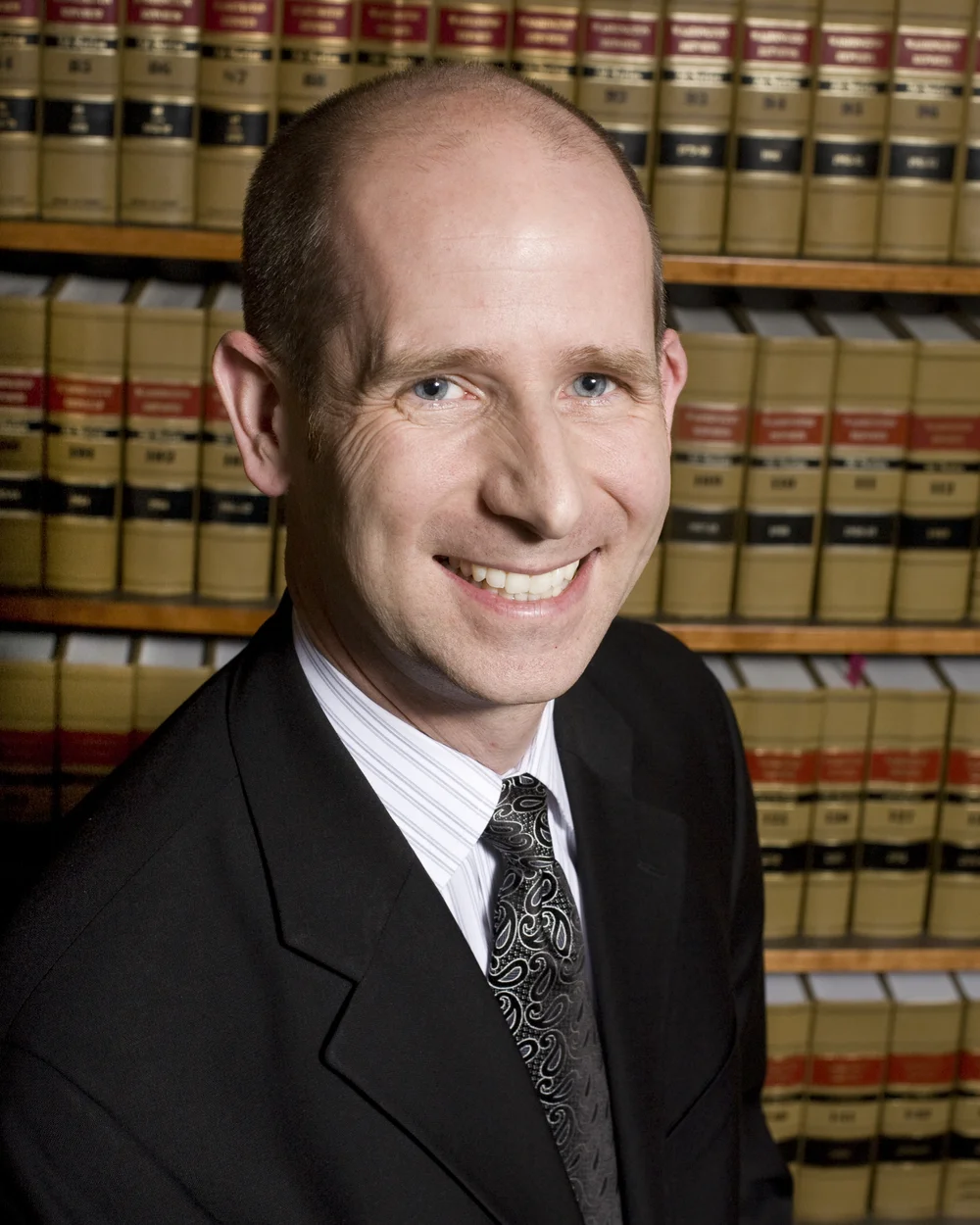
Complex litigation, on both sides of the v.
Mr. Spoonemore's practice emphasizes health care and insurance litigation, ERISA litigation in the health, disability and pension fields, federal securities litigation, and title, general business and class action litigation.
A Seattle native and second-generation attorney, he has been with Sirianni Youtz Spoonemore Hamburger for nearly three decades, following five years at the Seattle firm of Helsell Fetterman. He is the firm's co-managing partner.
As lead or co-lead counsel.
He has argued before the Washington Supreme Court and the Ninth Circuit, and has tried and litigated cases in state and federal courts in Washington, Oregon, California, Colorado, Georgia, Montana, Alaska, Pennsylvania, Utah, New Jersey, Minnesota, Delaware and Texas.
Health care and ERISA litigation.
In 2019, Mr. Spoonemore and his partner Eleanor Hamburger won summary judgment on liability against Community Health Systems on behalf of Empire Health Foundation. Weeks before trial, the case settled for $70 million. Under the settlement, 17,000 former patients of Deaconess and Valley Hospitals in Spokane had their medical debts erased, and the Foundation received $22 million.
Mr. Spoonemore and Ms. Hamburger brought class actions against Regence BlueShield, Premera Blue Cross, Group Health Cooperative, Moda, King County, the Washington Health Care Authority and Boeing. These cases eliminated coverage exclusions that had kept children with autism and other developmental disabilities from medically necessary care. See, e.g., O.S.T. v. Regence BlueShield, 181 Wn.2d 692 (2014); Z.D. v. Group Health Coop., 2012 WL 1977962 (W.D. Wash. 2012).
This work built on cases Mr. Spoonemore litigated in the late 1990s and early 2000s, which recovered more than $40 million for Washington insureds under the state's Every Category of Provider law. See Hoffman v. Regence BlueShield, 140 Wn.2d 121 (2000).
In 2016, the two launched the first class actions challenging denials of coverage for Harvoni and other curative hepatitis C drugs. A federal court ordered Washington's Medicaid program to cover the cure despite its estimated $800 million cost, and a state court entered a similar injunction for public employees. Three private insurers then settled and agreed to cover the treatment.
Mr. Spoonemore also represents individuals denied health or disability benefits. See, e.g., A.A. v. Blue Cross & Blue Shield, 2014 U.S. Dist. LEXIS 29986 (W.D. Wash. 2014) (skilled nursing care for a minor); K.F. v. Blueshield, 2008 U.S. Dist. LEXIS 71314 (W.D. Wash. 2008) (nursing care for a ventilator-dependent child); Camerer v. Cont'l Cas. Co., 76 F. App'x 837 (9th Cir. 2003) (benefits for an insured with a brain injury).
Health insurance discrimination.
Mr. Spoonemore is a leading litigator under Section 1557 of the Affordable Care Act, which bars discrimination in health programs and coverage. He also brings related discrimination claims under federal and state law. In Schmitt v. Kaiser Foundation Health Plan, 965 F.3d 945 (9th Cir. 2020), he and his partner won a Ninth Circuit decision recognizing that a health plan's design can support a disability discrimination claim under Section 1557. That case challenged an exclusion of hearing aids.
In May 2026, Mr. Spoonemore and Ms. Hamburger won three companion appeals in Division One of the Washington Court of Appeals. The court held that a health plan's blanket exclusion of obesity treatment, including GLP-1 medications such as Wegovy and Zepbound, may constitute disability discrimination under Washington law. Simonton v. Washington State Health Care Authority, No. 86988-4-I (Wash. Ct. App. May 4, 2026) (published); Herzog v. Kaiser Foundation Health Plan of Washington, No. 87256-7-I (Wash. Ct. App. May 4, 2026); Solorio v. Regence BlueShield, No. 87362-8-I (Wash. Ct. App. May 4, 2026).
In reversing the dismissal of each case, the court rejected the insurers' argument that Washington's essential health benefits regulation authorized the exclusions. It held that the state's nondiscrimination mandate applies to benefit design independently of that regulation.
The HIV/AIDS crisis, and where it began.
Mr. Spoonemore's health care practice began in the early 1990s. During the height of the HIV/AIDS crisis, he did pro bono work through the King County Bar Association's Volunteer Attorneys for Persons with AIDS (VAPWA) program. In the same years, he represented several hundred women who had been denied health insurance coverage for the treatment of breast and ovarian cancer. See Berry v. Blue Cross, 815 F. Supp. 359 (W.D. Wash. 1993).
In the mid-1990s, he was lead counsel in Bowen v. Principal Mutual, a class action that enjoined Principal Mutual from terminating health insurance coverage for hundreds of Washington residents diagnosed with HIV.
As part of his work for cancer and AIDS patients, he drafted the amendment to Washington's injunction bond statute, RCW 7.40.080. Patients who had won injunctions requiring coverage of urgently needed care often could not afford to post a bond. The amendment lets state courts waive the bond requirement:
The King County Bar Association featured Mr. Spoonemore in its "Voices of Justice" radio campaign for his work on behalf of people with HIV/AIDS.
Securities and pension litigation.
As lead counsel in Dreiling v. Jain, 281 F. Supp. 2d 1234 (W.D. Wash. 2003), Mr. Spoonemore obtained a judgment of more than $247 million, the largest in the history of Section 16(b). He also obtained the third-largest Section 16(b) settlement ever, against a former InfoSpace director and MCI/WorldCom. After a successful Ninth Circuit appeal, he won a significant settlement with American Express. Dreiling v. Am. Express Co., 458 F.3d 942 (9th Cir. 2006). He represents investors defrauded in Ponzi schemes. See Burdick v. Villalba, 2010 U.S. Dist. LEXIS 121837 (W.D. Wash. 2010) ($20 million judgment). He co-edited the WSBA deskbook Shareholder Litigation in Washington State (2014).
He has also litigated breaches of fiduciary duty under ERISA, imprudent investments and misappropriation of pension benefits. See Stanford v. Foamex L.P., 263 F.R.D. 156 (E.D. Pa. 2009); McCluskey v. Trs. of Red Dot Corp. ESOP & Trust, 268 F.R.D. 670 (W.D. Wash. 2010). In Levy v. Washington Department of Retirement Systems, the court held that Washington violated the state constitution by terminating vested retirement benefits of university and community college employees. In 2013, Washington's retired teachers and public employees chose him to argue the $7 billion UCOLA case before the Washington Supreme Court. Wash. Educ. Ass'n v. Dep't of Ret. Sys., 181 Wn.2d 233 (2014).
Defense, title and commercial litigation.
Mr. Spoonemore has successfully defended the Federal Reserve Bank and Janet Yellen, law firms, technology companies and insurers. See, e.g., Pettie v. Saxon Mortg. Servs., 2009 U.S. Dist. LEXIS 41496 (W.D. Wash. 2009); Edmonds v. Getty Images, 524 F. Supp. 2d 1267 (W.D. Wash. 2007); Global Educ. Servs. v. Intuit Inc., 2011 U.S. Dist. LEXIS 57593 (W.D. Wash. 2011). He has extensive experience with title insurance, including lien priority disputes for lenders on major construction projects. See Columbia Cmty. Credit Union v. Chicago Title Ins. Co., 2010 U.S. Dist. LEXIS 12624 (W.D. Wash. 2010).
He also handles confidential arbitrations, ranging from a case against a major accounting firm in New York to a dispute over control of a large hop-farming operation in Yakima.
Consumer and prisoner-profiteering class actions.
With his partner Chris Youtz, he represented Columbia Legal Services and a class of people who received collect calls in Judd v. AT&T. After several trips to the Washington Supreme Court, the case resolved with a $45 million recovery for families illegally billed for prison collect calls, with $23 million in cy pres funds directed to education, housing, transportation and other services for family members of the incarcerated.
Mr. Spoonemore has also brought prisoner-profiteering litigation against banks and promoters of involuntary debit card programs. In Reichert, Brown and Hall, those cases collectively recovered more than $19 million for violations of the Electronic Fund Transfer Act, after multiple trips to and wins in the Ninth Circuit.
Service, family and the long run.
Service has run through Mr. Spoonemore's career from the start. As a young lawyer, he represented several hundred women who had been denied coverage for breast and ovarian cancer treatment, and during the height of the HIV/AIDS crisis he volunteered through the King County Bar Association's Volunteer Attorneys for Persons with AIDS program. Read more about this work ↑
That commitment carried into more than twenty years of volunteer work with the American Cancer Society, including two terms as Chairman of the Board of Directors of the Society's twelve-state Great West Division. He received the St. George Award for exemplary service, the highest honor the American Cancer Society gives its volunteers.
Mr. Spoonemore was the Washington State debate champion in high school, and later a member of the Moot Court Honor Board and winner of the Falknor Appellate Competition at the University of Washington School of Law. He now gives back to the next generation of advocates as a volunteer coach and judge on the Washington State high school speech and debate circuit.
An avid and competitive middle-distance runner, he is a member of a local masters racing team and a fixture at 5K and 10K races in Western Washington. His other interests include hiking, downhill and cross-country skiing, scuba diving and trail running. He lives on Queen Anne Hill in Seattle with his wife, Dr. Laura M. Periman, M.D., and their two daughters.


